
كود المنتج: AEBL01
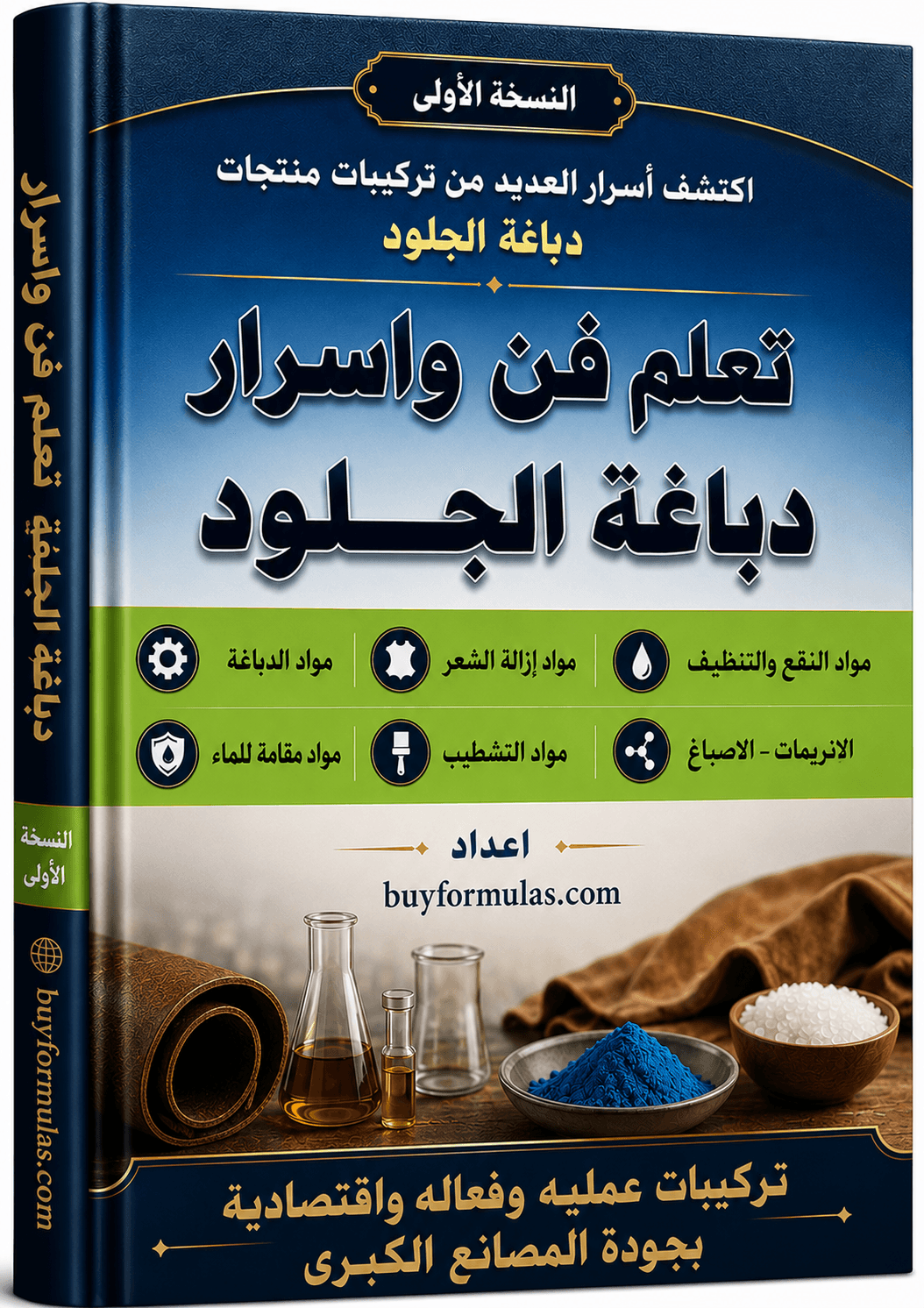
يهدف هذا الكتاب إلى تقديم دليل عملي شامل في مجال صناعة ودباغة الجلود، حيث يستعرض بالتفصيل المراحل المختلفة لمعالجة الجلود والمواد الكيميائية المستخدمة في كل مرحلة من مراحل الإنتاج. كما يتضمن الكتاب مجموعة من التركيبات الصناعية المهمة المستخدمة في التصنيع.
التركيبة والمكوّنات
تفاصيل بالكميات
التسليم خلال 72 ساعة
يصل على بريدك الإلكتروني
دفع آمن
آمن 100%
وصول دائم
في أي وقت
صيغة PDF
قابل للطباعة
تُعد صناعة الجلود من أقدم الصناعات التي عرفها الإنسان، حيث استخدمت الجلود منذ آلاف السنين في صناعة الملابس والأحذية والأدوات المختلفة. ومع تطور العلوم الكيميائية والصناعات الحديثة أصبحت عملية دباغة الجلود تعتمد على تقنيات متقدمة ومواد كيميائية متخصصة تهدف إلى تحويل الجلد الخام سريع التلف إلى مادة قوية ومرنة مقاومة للتحلل وقابلة للاستخدام في العديد من التطبيقات الصناعية. تمر عملية دباغة الجلود بعدة مراحل رئيسية، تبدأ بتنظيف الجلد الخام وإزالة الشعر والدهون، ثم معالجة الألياف البروتينية للجلد باستخدام مواد دباغة مختلفة، وتنتهي بعمليات التشطيب التي تعطي الجلد اللون والنعومة واللمعان والمظهر النهائي المطلوب. وتلعب المواد الكيميائية المستخدمة في هذه المراحل دورًا أساسيًا في تحديد جودة الجلد النهائي وخصائصه الفيزيائية والكيميائية. تعتمد صناعة الجلود الحديثة على مجموعة واسعة من المواد الكيميائية مثل القلويات، والأملاح، والإنزيمات، وعوامل الدباغة المعدنية أو النباتية، بالإضافة إلى مواد التشحيم والأصباغ ومواد التشطيب المختلفة. وتختلف التركيبات المستخدمة باختلاف نوع الجلد المطلوب إنتاجه، سواء كان جلدًا للأحذية أو الملابس أو المفروشات أو المنتجات الفاخرة. يهدف هذا الكتاب إلى تقديم دليل عملي مبسط يشرح أساسيات صناعة الجلود والمواد الكيميائية المستخدمة في مراحل الدباغة المختلفة، إضافة إلى عرض مجموعة من التركيبات الصناعية المهمة التي يمكن استخدامها في المدابغ ومصانع الكيماويات المتخصصة في هذا المجال. يشمل الكتاب على التعرف صناعة العديد من التركيبات الكيميائية المستخدمة في دباغة الجلود وتشمل على التالي:
1- مواد النقع والتنظيف:
تستخدم لإزالة الأوساخ والدم وإعادة ترطيب الجلد قبل المعالجة.
2- مواد إزالة الشعر (Liming Chemicals):
تعمل على فتح ألياف الجلد وفصل الشعر باستخدام مركبات قلوية مثل الجير وكبريتيد الصوديوم.
3- مواد إزالة الجير (Deliming Agents):
تستخدم لتقليل القلوية الناتجة عن مرحلة إزالة الشعر وتحضير الجلد للمعالجة التالية.
4- الإنزيمات (Bating Enzymes)
تعمل على تحسين نعومة الجلد وإزالة البروتينات غير المرغوب بها.
5- مواد الدباغة (Tanning Agents) وتشمل:
دباغة الكروم
الدباغة النباتية
6- مواد الدباغة الصناعية (Syntans),مواد التشحيم (Fatliquors)
تستخدم لإعطاء الجلد مرونة ونعومة ومنع جفاف الألياف.
7- الأصباغ (Leather Dyes):
تمنح الجلد اللون المطلوب وتساعد على تثبيت اللون داخل الألياف.
8- مواد التشطيب (Finishing Chemicals) وتشمل:
راتنجات الأكريليك
الشموع
السيليكون
مواد مقاومة الماء
يهدف هذا الكتاب إلى تقديم دليل عملي شامل في مجال صناعة ودباغة الجلود، حيث يستعرض بالتفصيل المراحل المختلفة لمعالجة الجلود والمواد الكيميائية المستخدمة في كل مرحلة من مراحل الإنتاج. كما يتضمن الكتاب مجموعة من التركيبات الصناعية المهمة المستخدمة في تصنيع كيماويات الجلود، إضافة إلى شرح للمعدات والتقنيات الحديثة المستخدمة في المدابغ. يُعد هذا الكتاب مرجعًا مفيدًا للمهندسين الكيميائيين والعاملين في صناعة الجلود وأصحاب المصانع والمهتمين بتطوير المنتجات الجلدية.
ماذا الذي ستحصل عليه
|
✓
مجموعه من التركيبات الكامله
كل المكوّنات بالكميات الدقيقة
|
✓
خطوات التصنيع
طريقة الإنتاج خطوة بخطوة
|
✓
ضبط الجودة
الفحص والمواصفات
|
|
✓
تكلفة الإنتاج
تفصيل للتكاليف
|
✓
دليل التعبئة
نصائح التخزين والمناولة
|
✓
نصائح تقنية
ملاحظات الخبراء وحل المشكلات
|
مواصفات الملف
آراء العملاء
|
★★★★★ كتاب جامد وجميل! مفصّل جدًا وسهلة الفهم. اشتغلت معي بشكل مثالي وعملي. محمود أحمد مصر |
★★★★★ أنصح به دليل متكامل بكل التفاصيل التقنية. وفّر علينا سنوات من التجارب. تومي ج. اسبانيا |
★★★★★ قوي جدا تركيبات احترافيه وسهله العمل وانصح به بشده للعاملين بنفس المجال سعيد د. سوريا |
خطوات التصنيع
خطوة بخطوة
طرق ضبط الجودة
الفحص والمواصفات
تحليل تكلفة الإنتاج
تفصيل التكاليف
التسليم خلال 72 ساعة
يصل على بريدك الإلكتروني
وصول دائم
اقرأ في أي وقت
دفعة واحدة
دفع آمن 100%