Gypsum block is a massive lightweight building material composed of solid gypsum, for building and erecting lightweight, fire-resistant, non-load bearing interior walls, partition walls, cavity walls, skin walls, and pillar casing indoors. Gypsum blocks are composed of gypsum, plaster, water and in some cases additives like vegetable or wood fiber for greater strength. Partition walls, made from gypsum blocks, require no sub-structure for erection and gypsum adhesive is used as bonding agent, not standard mortar. Because of this fundamental difference, gypsum blocks shouldn't be confused with the thinner plasterboard (also known as wallboard or gypsum board) used for paneling stud walls.
Manufacturing:
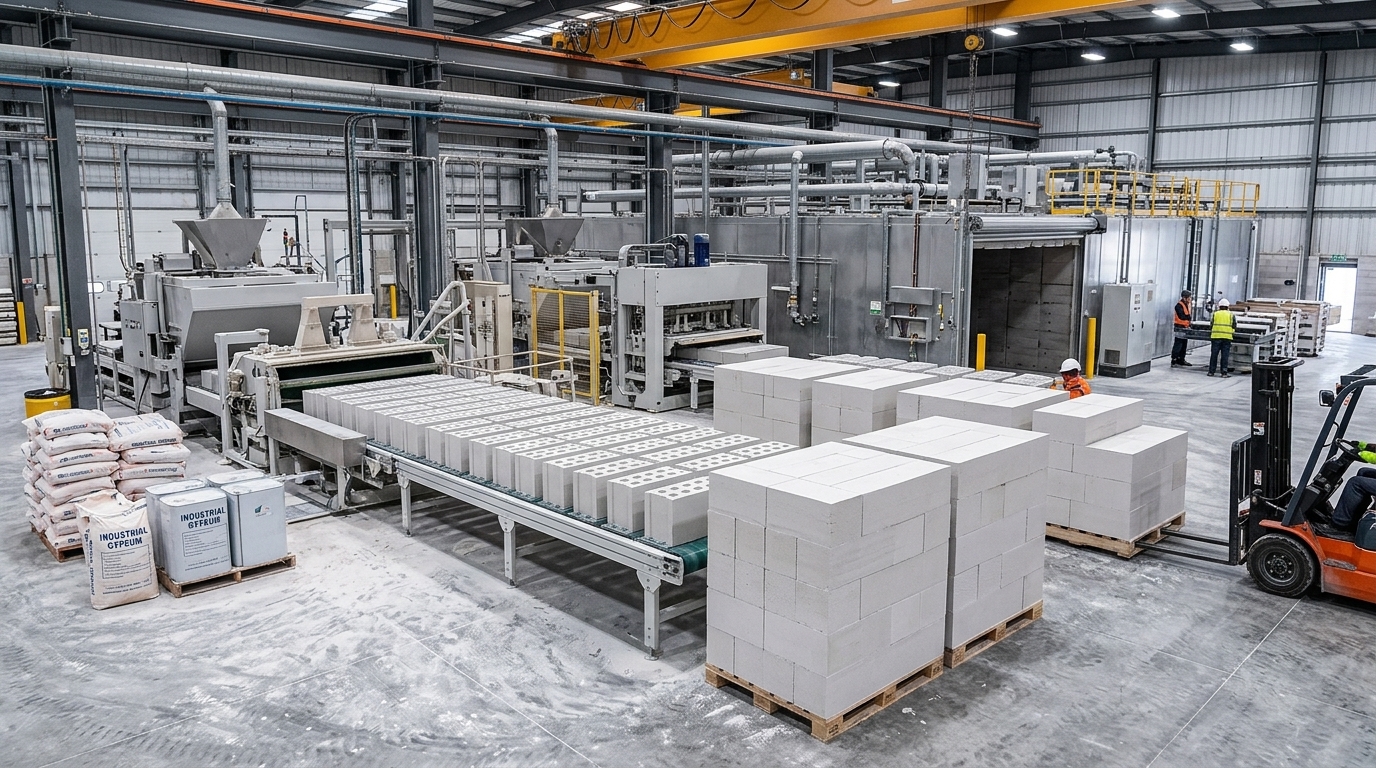
A gypsum block is made of gypsum plaster and water. The manufacturing process is automated at production plants where raw gypsum (CaSO4·2H2O) is ground and dried, then heated to remove three-quarters of the bound water and thus transformed into calcium sulfate hemihydrate (CaSO4·½H2O), also known as gypsum plaster, stucco, calcined gypsum or plaster of Paris. This process is also called calcination.
The plaster is then mixed with water, stirred and poured into molds to form gypsum blocks with standard formats, either solid, or with round or square open cores to reduce weight and conserve materials. Each block is moulded with tongue and groove at all sides, to enable quick and easy assembly. Still wet, the gypsum blocks are taken out of the molds and put into drying chambers. The dried gypsum blocks are packaged at the production plant and then transported to warehouses or construction sites.
Gypsum block can be manufactured using economical chemical raw materials that are easily available locally and globally. Therefore, to manufacture this product, it is necessary to obtain its formula from the website, as manufacturing this product does not require great capabilities and complications. We advise beginners in small and medium projects related to this field to buy the formula.